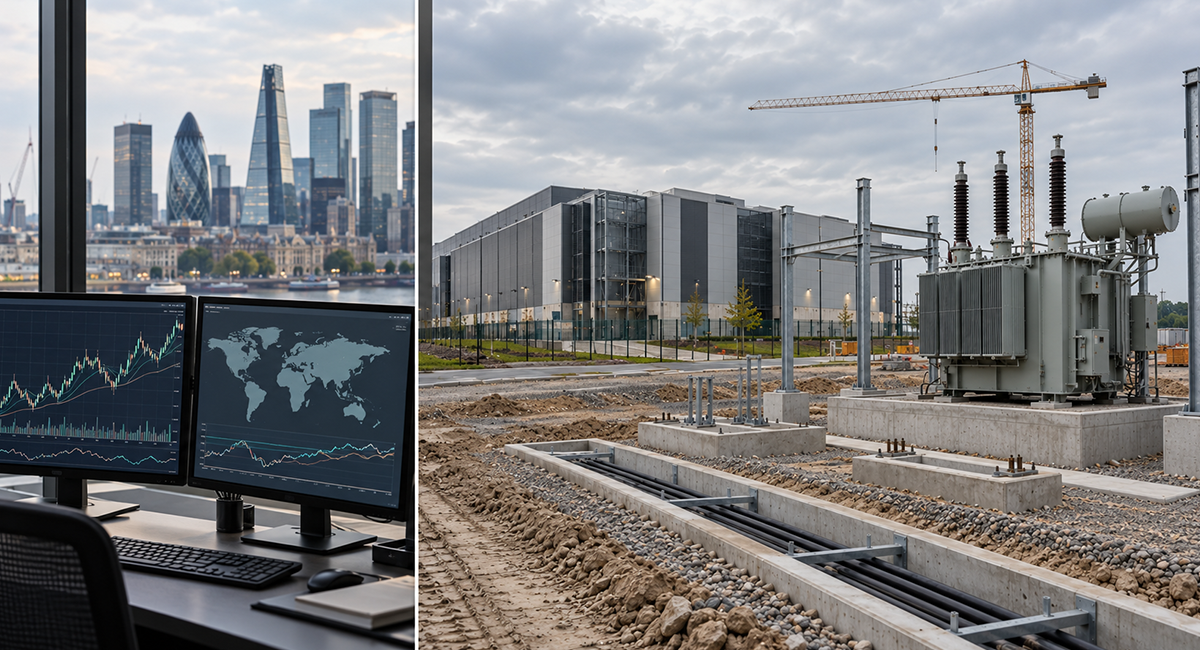
Artificial Intelligence is often described as the defining technology of our generation. Most of the discussion focuses on increasingly powerful models, faster processors and the race to develop the next breakthrough.
Yet the more immediate constraint may lie somewhere very different.
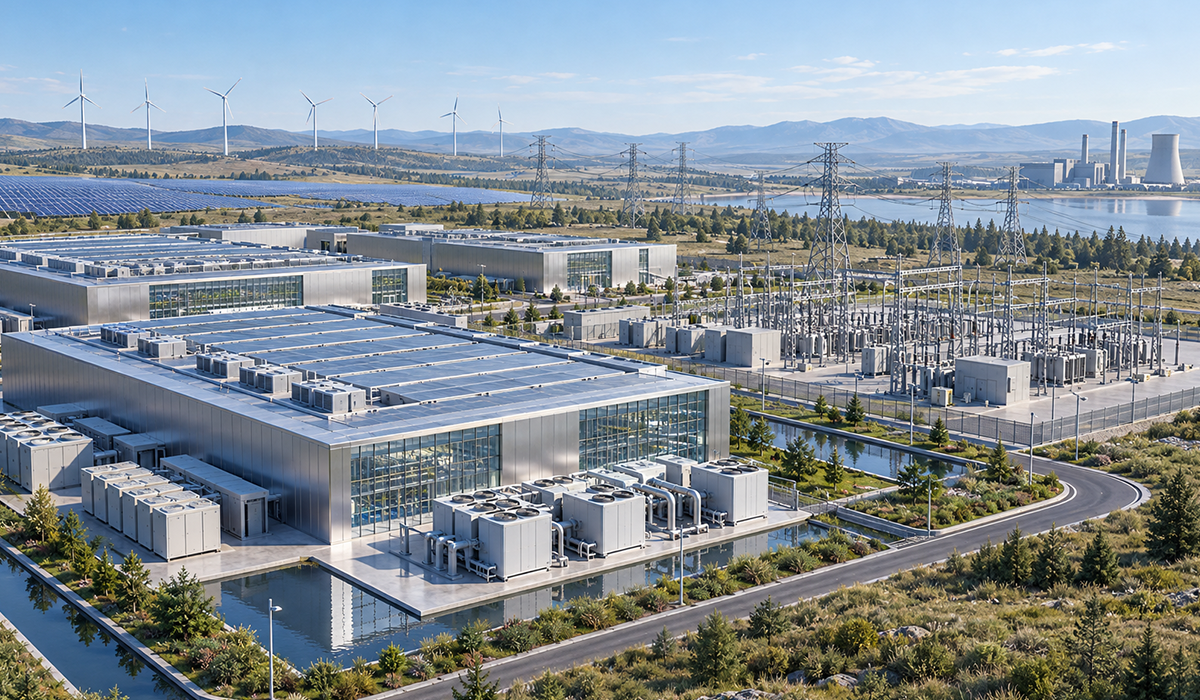
AI is triggering one of the largest infrastructure investment cycles seen in decades. Data centres are the visible symbol of that expansion, but they are only one part of a much broader delivery challenge involving electricity generation, transmission, substations, water, cooling, fibre, specialist equipment and increasingly stretched supply chains.
This is where Planning & Project Controls become increasingly strategic. As AI infrastructure grows in scale and complexity, success depends not simply on delivering individual projects, but on coordinating an ecosystem of interdependent programmes.
Everything must be designed, approved, financed, procured, constructed, commissioned and brought into operation in the right sequence. The next phase of AI will therefore be shaped not only by technology, but by the ability to plan and deliver complex capital programmes with speed and certainty.
The critical path for AI no longer sits inside one project schedule. It stretches across an entire infrastructure ecosystem.
The Infrastructure Behind Intelligence
Every significant increase in computing capacity creates demand far beyond the walls of a data centre.
Additional generation must be brought online. Transmission networks require reinforcement. New substations must be designed and built. Cooling systems become more complex as rack densities rise. Alongside these sit increasingly stretched supply chains and specialist manufacturing capacity.
These are not isolated projects. They are interdependent programmes in which the success of one package can determine the readiness of another.
A completed data centre without an energised grid connection is not operational capacity. A power programme without the necessary transformers, switchgear or transmission approvals cannot support the planned load. For Planning & Project Controls teams, understanding these dependencies becomes just as important as managing the schedule itself. Construction progress alone is therefore no longer a complete measure of delivery.
The Critical Path Has Changed
Historically, project teams concentrated on the critical path within an individual development. AI infrastructure requires a much wider view.
A delay in long-lead electrical equipment can postpone substation completion. A grid connection can determine the commercial opening of an entire campus. Planning and permitting can hold back generation or transmission capacity. Labour shortages can affect design, construction, controls and commissioning simultaneously.
This changes the central delivery question. It is no longer simply: “Is the building on programme?” It is: “Will every dependency required for operational readiness be ready at the right time?”
That question cannot be answered through fragmented contractor schedules or retrospective reporting. It requires integrated Planning & Project Controls, clear interfaces, credible logic and active management of risk.
Planning & Project Controls as a Strategic Capability
Planning, Scheduling and Project Controls are sometimes treated as reporting disciplines. On infrastructure programmes of this scale, that view is far too narrow.
Effective Project Controls establish the delivery architecture. They connect design, procurement, construction, utilities, commissioning and operational readiness into one coherent plan. They reveal where schedule confidence is weak, where interfaces are unmanaged and where decisions taken today will affect capacity months or years later.
The strongest Project Controls functions do more than describe progress. They provide challenge, foresight and decision support. They test whether schedules are realistic, expose emerging constraints, quantify risk, align stakeholders and turn complex information into action.
For owners, developers and delivery partners, this capability directly influences speed to market, capital efficiency and confidence in delivery. As AI infrastructure becomes larger and more interconnected, access to experienced planners and Project Controls professionals will increasingly become a source of competitive advantage.
What We Are Seeing in the Market
Osirian’s day-to-day conversations with planners, Project Controls leaders, project managers and capital project organisations reinforce a consistent picture.
Integrated programme visibility is becoming more valuable than isolated project reporting. Organisations are thinking about energisation, commissioning and operational readiness much earlier in the delivery lifecycle, rather than treating them as end-stage activities.
At the same time, experienced Planning & Project Controls professionals remain difficult to secure, particularly those able not only to build credible schedules, but to challenge assumptions, identify emerging constraints and give leadership confidence to act before delays become unavoidable.
These are not recruitment trends detached from delivery. They are indicators of where programme risk is concentrating and where stronger Planning & Project Controls capability can materially improve outcomes.
The Organisations That Plan Best Will Deliver First
AI investment may be driven by demand for computing, but operational capacity will be determined by infrastructure delivery.
The organisations most likely to succeed will not necessarily be those with the largest announcements or the most ambitious targets. They will be those able to integrate thousands of activities, manage interfaces across multiple organisations, secure scarce expertise and maintain a credible view of the route to completion.
That places Planning & Project Controls at the centre of the AI infrastructure challenge, not at its margins.
A Different Conversation
This Osirian Insights series will examine the infrastructure behind AI through the practical lens of programme delivery. Future articles will explore power and grid constraints, water and cooling, energy strategy, semiconductor supply chains, commissioning, digital delivery and the growing shortage of experienced Planning & Project Controls capability.
Because while Artificial Intelligence may be written in code, its future will be delivered through infrastructure.
About Osirian Consulting
For more than 20 years, Osirian Consulting has specialised in Planning, Scheduling and Project Controls for complex capital projects. We help organisations access experienced professionals who can strengthen programme visibility, challenge delivery risk and support projects from planning through construction, commissioning and operational readiness.
Our AI Infrastructure Insights combine that specialist market perspective with the wider issues shaping data centre, energy and infrastructure delivery.